
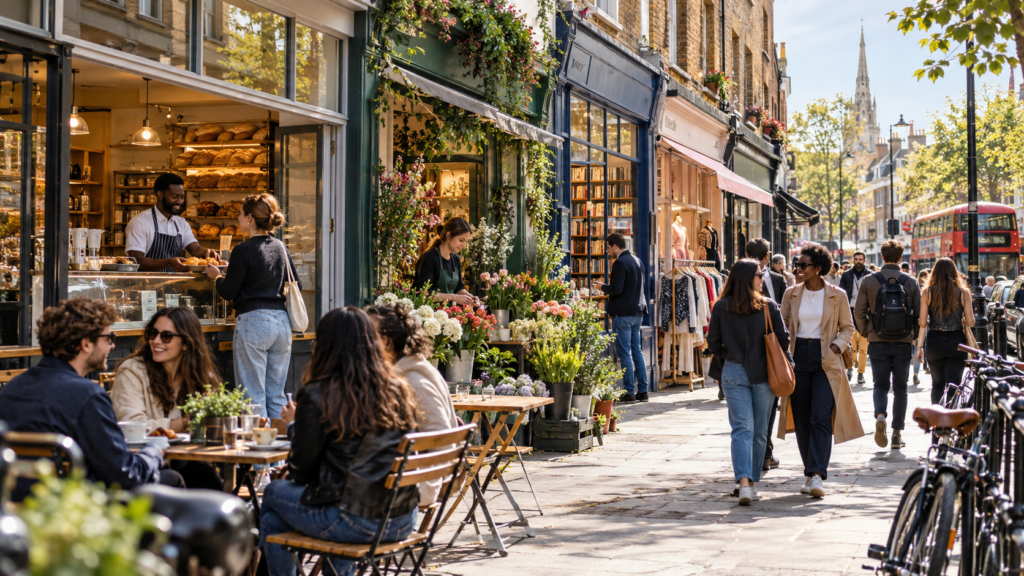
London’s economy is often associated with multinational companies, financial institutions and global technology firms. However, independent businesses are equally important to the capital’s economic identity, supporting neighbourhood employment, encouraging entrepreneurship and bringing distinctive services to local communities.
From family-owned restaurants in Camden to creative studios in Hackney and independent retailers in Brixton, smaller enterprises are influencing how Londoners shop, work and spend their money.
In 2026, these businesses are adapting to changing consumer behaviour, rising operating expenses and growing demand for personalised experiences.
Their contribution extends beyond commercial activity. Independent enterprises help maintain vibrant high streets, support local suppliers and create opportunities for people who might otherwise struggle to enter traditional employment.
How Important Are Independent Businesses to London’s Economy in 2026?
Independent businesses operate across almost every London industry, including hospitality, construction, technology, retail, professional services and personal care.
According to the Office for National Statistics, London had approximately 553,000 VAT and/or PAYE-registered businesses in March 2026, compared with 538,000 in March 2025.
This represented an annual increase of approximately 2.6%, the highest percentage increase among UK regions.
Although these figures include businesses of all sizes and ownership structures, they demonstrate London’s continuing importance as a centre for enterprise.
| Economic indicator | Latest reported position |
|---|---|
| Registered London businesses | Approximately 553,000 in March 2026 |
| Annual business growth | 2.6% between March 2025 and March 2026 |
| London’s share of UK registered businesses | 19.8% in March 2026 |
| Employment growth in central high-street food and accommodation services | 26% between 2015 and 2024 |
The figures highlight an important distinction: business growth does not automatically mean every independent retailer or neighbourhood enterprise is thriving. Economic conditions vary considerably between boroughs and industries.
Nevertheless, smaller businesses remain central to London’s entrepreneurial environment.
How Are Independent Shops Transforming London’s High Streets?
Creating Distinctive Neighbourhood Shopping Experiences
London’s neighbourhoods have different commercial identities, often influenced by their independent businesses.
Areas such as Shoreditch, Peckham, Greenwich and Notting Hill feature combinations of specialist retailers, cafés, creative businesses and local services.
These enterprises offer experiences that large national chains may find difficult to reproduce.
An independent bookshop might organise community readings, while a neighbourhood café could collaborate with local artists or source ingredients from nearby producers.
Such activities encourage customers to visit physical locations rather than relying entirely on online shopping.
Supporting the Evolution of Traditional High Streets
London’s high streets are increasingly becoming mixed-use destinations rather than exclusively retail spaces.
A March 2026 London Assembly analysis reported that retail accounted for 17.7% of London high-street addresses in June 2025.
This reflects the importance of residential, office and other uses in these areas.
Independent cafés, beauty businesses, fitness studios ahttps://www.london.gov.uk/who-we-are/what-london-assembly-does/london-assembly-research-unit-publicationnd professional service providers can help attract visitors throughout the day.
These changes also connect with broader commercial property developments across London, where changing workplace and consumer requirements influence demand for premises.
How Do Local Businesses Support Employment and Community Wealth?
Independent businesses contribute to London’s economy by creating employment and purchasing goods and services from other enterprises.
A neighbourhood restaurant, for example, might employ kitchen staff, purchase produce from wholesalers and hire a local accountant.
Its commercial activity can therefore generate additional demand beyond the restaurant itself.
Providing Opportunities for Local Workers
Small businesses can offer entry-level jobs, apprenticeships, flexible working arrangements and opportunities to develop practical skills.
They may also provide progression routes for employees who eventually establish their own businesses.
However, employment quality depends on individual employers, including their approach to wages, training and working conditions.
Strengthening Local Business Networks
Independent enterprises frequently collaborate with nearby suppliers, tradespeople and service providers.
These connections can make neighbourhood economies more resilient by diversifying the relationships on which businesses depend.
The benefit is not automatic: a business may still purchase most of its supplies from outside London. Supporting local economic circulation requires deliberate purchasing and partnership decisions.
Why Are New Business Models Creating Opportunities in 2026?
London entrepreneurs are increasingly exploring business models that combine operational flexibility with established customer demand.
Some founders prefer traditional independent ownership, allowing them to develop distinctive brands and make decisions without external restrictions.
Others investigate partnerships, licensing arrangements or franchise models to reduce certain uncertainties associated with starting a business.
For entrepreneurs comparing different routes into ownership, researching business franchise opportunities can help explain how established operating systems compare with building a business independently.
However, franchises involve initial investment, contractual obligations and potentially continuing fees. They are not necessarily less risky than independently owned businesses.
The Growth of Flexible Entrepreneurship
Modern entrepreneurs do not always require conventional commercial premises.
Home-based consultancy businesses, independent digital agencies, mobile beauty services and appointment-based providers can operate with lower property overheads.
This flexibility may make entrepreneurship more accessible, although businesses must still account for insurance, registration requirements, marketing expenses and relevant regulations.
Financial planning remains essential, particularly given the difficulties examined in App London’s article on why UK startups fail within their first three years.
How Is Technology Helping Independent London Businesses Compete?
Digital technology is changing how smaller enterprises attract customers and manage daily operations.
Independent retailers can combine physical shops with online ordering, while restaurants increasingly use reservation systems, digital menus and customer relationship tools.
Social media also allows businesses to build communities without relying entirely on expensive advertising campaigns.
Combining Online Convenience With Personal Service
A neighbourhood bakery might publish its daily products online, accept advance orders and offer collection from its physical shop.
Similarly, an independent fashion retailer could showcase new arrivals through social platforms while providing personalised appointments.
These approaches give customers additional convenience without removing the human relationships that distinguish independent businesses.
Delivery services are also becoming important for businesses serving customers outside conventional trading hours.
App London’s discussion of Sunday courier services for UK businesses explores how changing delivery expectations affect commercial operations.
For smaller enterprises, the challenge is selecting technology that improves efficiency without creating unnecessary subscription expenses or operational complexity.
What Challenges Are Independent Businesses Facing in London?
Despite the opportunities available, operating independently in London remains financially demanding.
Commercial rents, staffing costs, energy bills, insurance and business rates can place substantial pressure on profitability.
Customer spending patterns also vary between neighbourhoods, making location selection particularly important.
Rising Costs and Commercial Property Pressure
A business located near a major transport hub may benefit from higher footfall but face greater rental expenses.
Meanwhile, operating from a quieter residential neighbourhood might reduce certain overheads while limiting passing trade.
Owners must evaluate both factors rather than assuming that the busiest location delivers the strongest financial results.
Competition and Changing Consumer Expectations
Independent enterprises compete with national chains, online marketplaces and other local businesses.
Customers increasingly expect convenient payment methods, accurate online information and reliable service.
London’s changing cultural and consumer landscape adds another dimension, as discussed in how London is adapting to social and cultural trends.
Successful businesses must respond to these expectations while maintaining their individual identity.
What Could Strengthen London’s Independent Economy Beyond 2026?
London’s future economic resilience will depend partly on whether smaller businesses can access affordable premises, suitable financing and skilled workers.
Local authorities, business associations and property owners can contribute by supporting practical improvements to commercial areas.
Vacant premises could potentially be used for temporary retail projects, affordable workspaces or community-focused activities where planning and financial arrangements permit.
Independent businesses can also strengthen their position through collaboration.
For example, several neighbouring retailers could organise a shared promotional event, while cafés and cultural venues might coordinate activities that attract visitors during quieter trading periods.
A useful approach is to measure local economic performance through more than the number of new businesses. Business survival, local hiring, occupied premises and repeat customer activity can provide a fuller picture of neighbourhood prosperity.
Conclusion
Independent businesses are shaping London’s local economy in 2026 through entrepreneurship, employment, digital innovation and neighbourhood development.
Their importance is not limited to sales or business registrations. They help create distinctive high streets, maintain local services and encourage connections between residents and entrepreneurs.
Although rising costs and competition present significant challenges, smaller enterprises have opportunities to develop sustainable businesses by understanding customer needs, managing expenses and building reliable partnerships.
London’s long-term economic success will therefore depend not only on attracting major corporations but also on creating conditions in which its independent businesses can survive, grow and contribute to thriving local communities.



More Stories
Why Are Sunday Courier Services Becoming Important for UK Businesses?
What Is Causing Commercial Property Changes Across London?
Why Are So Many UK Startups Failing Within Their First Three Years?