
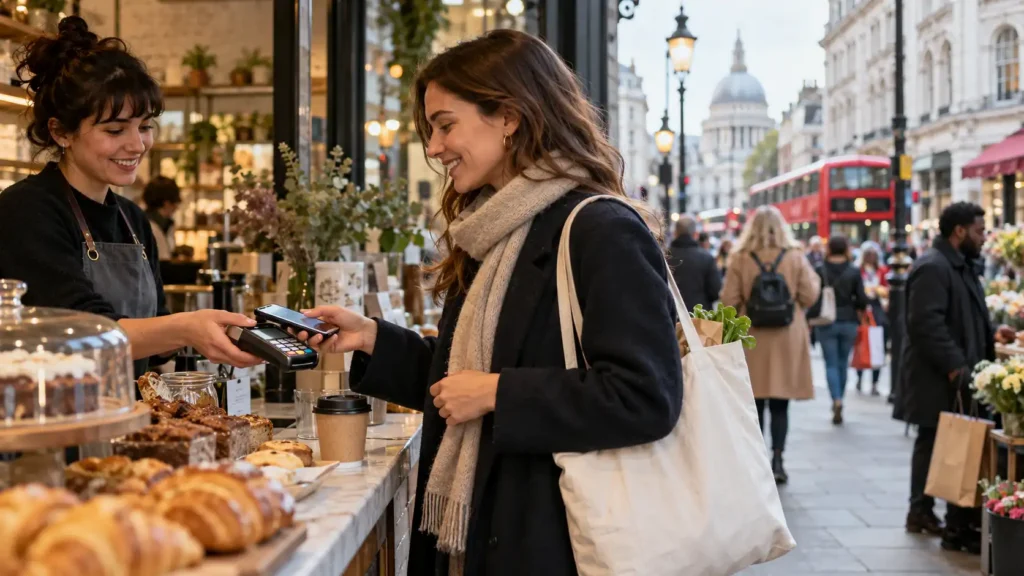
London’s shopping culture is experiencing a significant transformation as cashless payments become part of everyday life. From independent cafés in Shoreditch to busy shopping centres in Westfield, customers increasingly prefer paying with contactless cards, smartphones and digital wallets rather than carrying physical cash.
The convenience of tapping a phone or bank card has changed more than how people complete transactions. It influences purchasing decisions, customer expectations, business operations and how retailers interact with shoppers.
As London continues embracing digital technology, understanding the impact of cashless payments is becoming increasingly important for consumers and local businesses.
Why Are Cashless Payments Becoming So Popular in London?
The growth of cashless payments reflects changing consumer preferences, improvements in financial technology and wider acceptance of digital payment systems.
According to UK Finance’s Payment Markets 2026 findings, contactless transactions reached 19.2 billion across the UK in 2025, representing approximately 39% of all payments.
The same research revealed that 65% of UK adults were registered for at least one mobile payment service, highlighting the growing importance of digital wallets.
Although these are nationwide rather than London-specific figures, they help explain the changing payment environment experienced by shoppers across the capital.
Convenience Is Influencing Everyday Purchases
Londoners frequently move between public transport, coffee shops, supermarkets and restaurants throughout the day.
Cashless payments make these transactions quicker and more convenient.
A commuter purchasing breakfast before catching the Underground can complete a contactless transaction without searching for coins or waiting for change.
Similarly, visitors exploring London’s markets can purchase small items using their smartphones wherever suitable payment terminals are available.
For many consumers, payment convenience has become part of the overall shopping experience rather than simply the final step.
How Are Digital Payments Changing Consumer Shopping Behaviour?
The increasing availability of cashless transactions is influencing where, when and how Londoners shop.
Smaller Purchases Are Becoming Easier
Previously, customers carrying limited cash might postpone a purchase or avoid shops without convenient payment options.
Today, digital payments remove much of that friction.
Purchasing a £3 coffee, £5 snack or inexpensive accessory requires little preparation when customers already have a payment-enabled device.
However, easier transactions do not necessarily mean shoppers spend more overall. Some consumers use digital banking notifications to monitor spending more carefully.
The important change is that payment methods are becoming less of an obstacle to individual purchasing decisions.
Online and Offline Shopping Are Becoming Connected
Modern London shoppers increasingly expect similar payment experiences across physical stores and online platforms.
A customer might discover a product on social media, compare prices online and purchase it through a retailer’s website before collecting it locally.
Digital wallets and integrated checkout systems can make these interactions smoother.
This development also influences delivery expectations. As explored in App London’s article about Sunday courier services for UK businesses, modern consumers increasingly value convenient ordering and flexible delivery.
Retailers offering efficient payments alongside reliable fulfilment can create a more consistent customer experience.
How Are London’s Independent Businesses Adapting to Cashless Shopping?
Digital payments are no longer limited to major supermarket chains and established retailers.
Independent cafés, market traders, beauty salons and neighbourhood shops can now use portable card readers and smartphone-based payment solutions.
These technologies allow smaller businesses to accept electronic payments without installing complicated traditional checkout systems.
The Benefits and Challenges for Local Retailers
Cashless technology can improve transaction speed and simplify sales recording. However, businesses must also consider processing fees, reliable internet connections and technical problems.
| Business area | Potential effect of cashless payments |
|---|---|
| Checkout speed | Faster transactions and shorter queues |
| Customer convenience | More ways to complete purchases |
| Financial records | Easier digital sales tracking |
| Operating costs | Card processing and equipment fees |
| Security | Less physical cash stored on-site |
| Accessibility | Possible difficulties for cash-dependent customers |
The financial benefits depend on transaction volumes, payment-provider charges and individual business circumstances.
A small retailer should therefore compare the total costs of cash handling and electronic payment processing rather than assuming one method is always cheaper.
Is Cash Still Important in London’s Increasingly Digital Economy?
Despite widespread adoption of electronic payments, physical cash continues to serve an important role.
Some Londoners prefer using notes and coins to manage weekly budgets, maintain privacy or avoid dependence on electronic devices.
Others may experience difficulties using banking apps or accessing digital financial services.
For customers who regularly withdraw money, understanding their bank’s max cash machine withdrawal rules can help them plan spending and avoid unexpected withdrawal restrictions.
Why Maintaining Payment Choice Matters
UK Finance reported that cash accounted for approximately 8% of all UK payments in 2025, compared with 45% in 2015.
Nevertheless, around 1.4 million UK adults mainly relied on cash for everyday spending.
The Financial Conduct Authority’s access-to-cash guidance explains how designated banks and building societies must assess significant gaps in local cash withdrawal and deposit services.
Importantly, these regulations concern access to cash, not whether individual retailers must accept it.
For London businesses serving diverse communities, offering both cash and digital payment options can help accommodate different customer preferences.
Are Cashless Payments Changing How Londoners Manage Their Money?
One of the less visible consequences of digital payments is the changing relationship between consumers and their spending information.
Digital Banking Makes Spending Easier to Track
Many banking applications provide transaction histories, spending notifications and budget categories.
Instead of collecting paper receipts, customers can review purchases directly on their smartphones.
For example, someone spending £4.50 on coffee five working days a week would spend approximately £22.50 weekly.
Over 48 working weeks, that becomes £1,080.
This illustrative calculation demonstrates how small regular purchases accumulate and why digital spending records may help consumers recognise patterns.
However, frequent contactless purchases can also feel less noticeable than handing over physical money. Consumers still need to review transactions and set realistic budgets.
Customer Expectations Are Becoming More Personalised
Digital payment systems can support loyalty schemes, electronic receipts and personalised offers.
For example, a neighbourhood café might connect its payment terminal with a digital rewards programme.
Returning customers could earn discounts without carrying physical loyalty cards.
Retailers must nevertheless handle personal information responsibly, explain relevant data collection and comply with applicable privacy requirements.
Convenience should not come at the expense of customer trust.
What Does the Cashless Revolution Mean for London’s High Streets?
London’s retail environment is changing as customers combine digital convenience with physical shopping experiences.
Independent retailers must increasingly compete on service quality, accessibility and overall convenience rather than payment acceptance alone.
App London’s discussion of commercial property changes across London highlights how retail spaces are adapting to changing consumer expectations and the growth of experience-led shopping.
Cashless technology forms one part of this wider transformation.
Could Faster Checkouts Improve Customer Experience?
Consider a hypothetical independent coffee shop completing 100 transactions daily.
If improved payment arrangements save an average of 12 seconds per transaction, the total time saved would equal 20 minutes per trading day.
That does not automatically translate into additional sales, but it could free employees to prepare orders or assist customers during busy periods.
The example is illustrative rather than a measured result from a London business. Actual improvements depend on existing checkout speeds and operational arrangements.
What Challenges Could Shape London’s Cashless Future?
Despite its advantages, an increasingly digital payment environment creates several practical concerns.
Payment terminals can experience connectivity issues, banking systems may suffer outages, and smartphones can run out of battery.
Businesses relying entirely on electronic payments need contingency arrangements to avoid unnecessary disruption.
Digital exclusion also remains significant. Some older customers, people without suitable bank accounts and individuals who prefer cash budgeting may find cashless-only environments inconvenient.
These concerns demonstrate why technological progress should be accompanied by practical payment choice.
The wider impact also connects with the capital’s evolving lifestyles, explored in App London’s article on London’s changing social and cultural trends.
What Is the Future of Cashless Shopping in London?
Looking beyond 2026, digital wallets, integrated loyalty programmes and alternative payment technologies are likely to play increasingly important roles in London’s retail economy.
Account-to-account payments could also provide new ways for shoppers to pay businesses directly, although their adoption will depend on security, consumer protection, convenience and retailer support.
For independent businesses, the priority should not simply be introducing more technology.
Successful payment strategies should balance affordability, reliability, accessibility and customer preferences.
Retailers that understand how their customers want to pay will be better positioned to adapt as shopping habits evolve.
Conclusion
Cashless payments are transforming shopping habits across London by making transactions faster, connecting online and physical retail, and giving businesses new ways to manage purchases and customer relationships.
However, this transformation does not mean physical cash has become irrelevant.
The future of London’s shopping experience is likely to depend on flexibility rather than eliminating traditional payment methods.
Businesses that combine convenient digital payments with inclusive customer service can create a shopping environment that works for a wider range of Londoners.


More Stories