
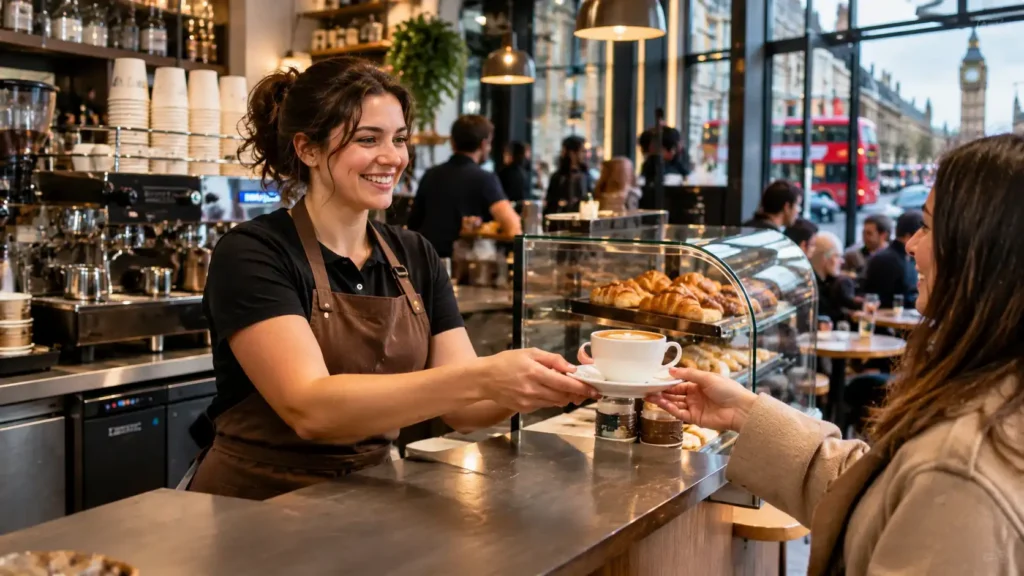
The investment needed to open a branded coffee shop in London depends on several factors, including location, franchise agreements, property size, interior design, equipment and staffing requirements.
A small independent branded café may require approximately £50,000 to £120,000, while a larger premium coffee shop or established franchise could require £150,000 to £500,000 or more.
Understanding these costs before committing to a location can help entrepreneurs reduce financial risks and build a sustainable business.
What Is the Average Cost of Opening a Branded Coffee Shop in London?
The initial investment varies significantly depending on the business model. Entrepreneurs can establish their own coffee brand, purchase a franchise or operate a licensed coffee outlet.
The following table provides illustrative planning estimates for different coffee shop formats in London.
| Coffee Shop Type | Estimated Initial Investment |
|---|---|
| Small takeaway coffee kiosk | £25,000–£60,000 |
| Independent branded café | £50,000–£120,000 |
| Mid-sized premium coffee shop | £100,000–£250,000 |
| Established coffee franchise | £150,000–£350,000+ |
| Large flagship coffee outlet | £300,000–£500,000+ |
These figures are indicative budgets rather than verified franchise quotations. Actual costs depend on premises, lease terms, brand requirements and the extent of refurbishment.
For first-time entrepreneurs, starting with a smaller coffee shop can reduce financial exposure while allowing the business to establish a customer base.
What Are the Main Startup Costs for a Coffee Shop in London?
Opening a branded coffee shop involves more than purchasing coffee machines and renting commercial premises. Entrepreneurs must consider several initial expenses before launching.
1. Commercial Property Rent and Deposits
Location is one of the biggest factors influencing coffee shop profitability.
Premium areas such as Soho, Covent Garden, Canary Wharf and Kensington generally involve higher property costs than many outer London neighbourhoods.
Depending on the location and size, commercial rent could range from approximately £2,000 to £10,000 or more per month.
Landlords may also request rent deposits, advance payments and additional security. Business rates and service charges can increase occupancy costs further.
2. Interior Design and Shop Fitting
A branded coffee shop needs a consistent visual identity that attracts customers and creates a comfortable environment.
Interior investment may include seating, lighting, counters, flooring, signage, kitchen preparation areas and accessible customer facilities.
Basic refurbishment could cost £15,000 to £30,000, while extensive commercial fit-outs may exceed £75,000.
Entrepreneurs should obtain detailed contractor quotations before signing a lease.
3. Coffee Equipment and Technology
Professional equipment is essential for maintaining product quality and serving customers efficiently.
A commercial espresso machine may cost approximately £4,000 to £15,000, depending on capacity and specification.
Additional investment is required for grinders, refrigeration, water filtration, dishwashing equipment, payment terminals and point-of-sale systems.
A practical equipment budget for a small or medium-sized café could range from £10,000 to £30,000.
Is Opening a Coffee Franchise More Expensive Than an Independent Café?
Franchising can provide entrepreneurs with an established brand identity, operational guidance, supplier relationships and marketing support.
However, franchise agreements may involve initial fees, ongoing royalties, advertising contributions and mandatory equipment purchases.
Entrepreneurs researching how much is a starbucks franchise should understand that Starbucks does not generally offer conventional individual franchise opportunities in the UK. Its business arrangements include company-operated and licensed stores, with eligibility and investment requirements differing from traditional franchise models.
Other established coffee brands may provide franchise opportunities with defined financial criteria.
Independent coffee shops offer greater flexibility over menus, pricing, suppliers and branding. Nevertheless, owners must develop customer recognition and marketing strategies themselves.
The right option depends on available capital, business experience and long-term objectives.
How Much Working Capital Should a Coffee Shop Owner Keep?
Working capital is essential because a new coffee shop may take several months to establish consistent sales.
Owners must cover staff salaries, rent, utilities, ingredients, insurance, maintenance and marketing even when customer demand fluctuates.
A sensible approach is to reserve enough cash for at least three to six months of essential operating expenses.
For example, if monthly operating costs reach £15,000, a business may need £45,000 to £90,000 in additional financial reserves.
This reserve should be considered separately from initial refurbishment and equipment costs.
What Licences and Legal Requirements Apply to London Coffee Shops?
Before opening, entrepreneurs must ensure their premises meet food safety, employment and commercial property requirements.
Coffee shops must register as food businesses with their local authority at least 28 days before trading. Registration is free, according to the UK Government’s food business guidance.
Owners should also assess planning permissions, food hygiene procedures, allergen information, insurance and any licences required for particular activities.
Business rates must be included in the financial plan. From April 2026, qualifying hospitality properties in England are subject to revised business rates multipliers rather than the previous general retail, hospitality and leisure relief scheme.
How Much Profit Can a Branded Coffee Shop Make in London?
Profitability depends on customer traffic, average transaction value, operating efficiency and property expenses.
Consider a coffee shop serving 180 customers daily, with an average transaction value of £5.50.
Illustrative Monthly Revenue Calculation
| Revenue Details | Estimated Value |
|---|---|
| Customers per day | 180 |
| Average customer spend | £5.50 |
| Trading days per month | 26 |
| Estimated Monthly Sales | £25,740 |
Note: Illustrative gross sales before operating costs, VAT treatment and tax. This is not a profit forecast.
Although revenue may appear attractive, wages, rent, stock purchases and other overheads can substantially reduce earnings.
Entrepreneurs should calculate their break-even sales volume before opening and regularly monitor actual performance.
How Can Entrepreneurs Reduce Coffee Shop Startup Costs?
Reducing unnecessary expenditure can improve the financial stability of a new café.
Choosing an existing hospitality premises may reduce refurbishment expenses, particularly when suitable plumbing, electrical systems and ventilation are already installed.
Leasing equipment instead of purchasing everything outright can also preserve initial cash, although total financing costs should be compared carefully.
Owners can begin with a focused menu, recruit staff according to expected demand and invest in digital marketing rather than expensive traditional advertising campaigns.
Developing relationships with nearby offices, residential communities and independent suppliers can also help build repeat business.
Is Opening a Branded Coffee Shop in London a Good Investment?
A branded coffee shop can become a viable long-term business when its location, customer demand and operating costs are carefully managed.
However, London has strong competition from established chains, independent cafés and takeaway operators.
Entrepreneurs should conduct local market research, evaluate competing businesses and prepare realistic financial forecasts before investing.
The UK Government’s business planning guidance can help founders structure their commercial strategy and financial assumptions.
Conclusion
Opening a branded coffee shop in London may require anywhere from £25,000 for a modest takeaway kiosk to more than £500,000 for a premium flagship outlet.
For many independent branded cafés, an initial budget of £50,000 to £120,000 provides a starting point for planning, although additional working capital may be necessary.
Ultimately, successful coffee shop investment depends on selecting the right location, controlling operational expenses, maintaining product quality and building a loyal customer base.
With careful budgeting and realistic financial expectations, entrepreneurs can create a coffee business positioned for sustainable growth in London’s competitive hospitality market.

More Stories
How Are Hospitality Businesses Attracting More Visitors to South West England?
How Are Independent Businesses Shaping London’s Local Economy in 2026?
Why Are Sunday Courier Services Becoming Important for UK Businesses?